Punjab Ration Card Scheme 2026
The CM Punjab Ration Card Scheme 2026 is a major relief initiative for low-income families facing rising food prices. Under this program, eligible households can receive a Rs. 3,000 monthly grocery subsidy and a Rs. 10,000 special Ramzan relief.
Registration is linked with PSER and NADRA verification to ensure transparency. Families can apply online through the PSER portal, check eligibility via 8070 SMS, or visit Union Council and e-Khidmat Markaz offices. Residents of Punjab with monthly income below Rs. 50,000 may qualify. The subsidy can be used at Utility Stores and registered local shops.
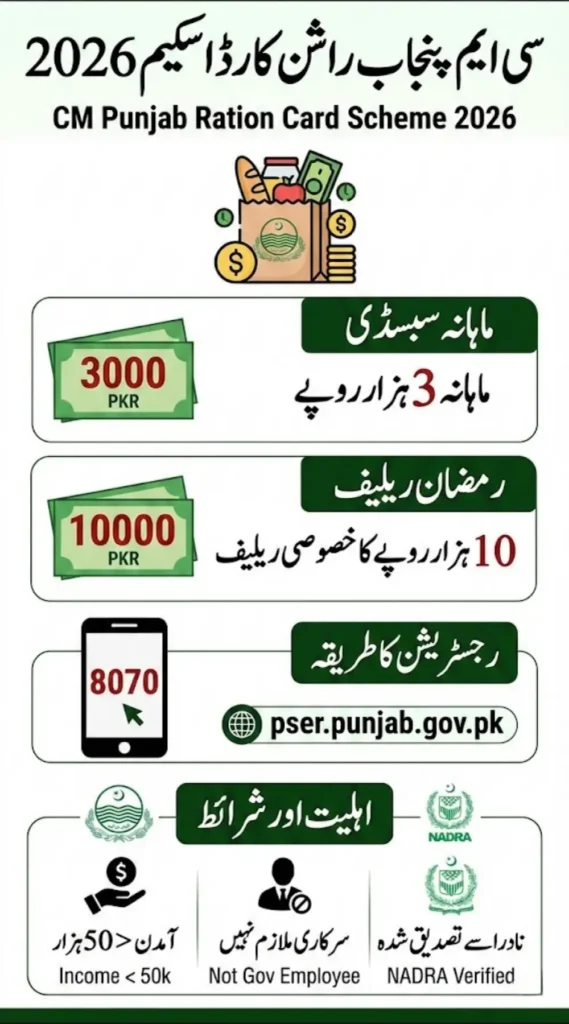
Quick Info – CM Punjab Ration Card 2026
| Feature | Details |
|---|---|
| Program Name | CM Punjab Ration Card Scheme 2026 |
| Monthly Subsidy | Rs. 3,000 |
| Ramzan Relief | Rs. 10,000 (special package) |
| Registration System | PSER |
| SMS Code | 8070 |
| Distribution Points | Utility Stores & registered shops |
| Target Group | Low-income families in Punjab |
How to Apply Online for CM Punjab Ration Card 2026
The government has kept the process simple and mostly online to avoid agents and delays.
Step-by-Step Online Apply Process
- Visit the official PSER portal: pser.punjab.gov.pk
- Enter your 13-digit CNIC and a mobile number registered in your name
- Fill in household details carefully, including:
- Family members
- Monthly income
- Home address
- Submit the form and save your reference number
This PSER registration now acts as the main filter for ration cards and Ramzan relief in 2026.
Other Ways to Register or Check Eligibility
Not everyone is comfortable with online forms, especially in rural areas. That’s why multiple options are available:
- 8070 SMS Service: Send your CNIC (without dashes) to 8070
- Door-to-Door PSER Survey: Teams are visiting homes in many areas
- Union Council / e-Khidmat Markaz: Walk-in support for registration and guidance
These options ensure no deserving family is left out due to lack of internet access.
Who Can Get the Punjab Ration Card? (Eligibility)
You may qualify if:
- You are a permanent resident of Punjab
- Monthly household income is below Rs. 50,000
- Your household is registered and verified in PSER
- Your PMT (poverty score) is generally below 35
- No family member is a government employee or registered tax filer
All information is cross-checked with NADRA and other databases, so honesty matters.
Documents You Should Keep Ready
Before applying, keep these documents available:
- Original CNIC
- CNIC-linked mobile number
- B-Form or Family Registration Certificate (FRC)
- Recent electricity or gas bill (address proof)
Even small mismatches with NADRA records can cause delays.
How Will the Subsidy Be Used?
The system combines cash relief and controlled distribution:
- Monthly subsidy is linked to your ration card
- Purchases can be made at Utility Stores or registered karyana shops
- Ramzan relief may be given as cash or special assistance, based on official notification
This controlled model also helps reduce black marketing and misuse.
What’s New in 2026?
This year, PSER verification is everything:
- Outdated PSER data can lead to disqualification
- Old beneficiary lists are being re-verified
- New families are being added through updated surveys
In short, keeping your PSER profile accurate is the key to staying eligible.
Common Reasons Applications Get Rejected
From field reports, the most common issues are:
- CNIC and mobile number not linked
- Incorrect income details
- Household income above the limit
- A family member listed as a government employee
- Duplicate entries in welfare programs
Important Safety Advice
Registration is 100% free. No fees, no shortcuts.
- Don’t trust agents asking for money
- Use only official government portals
- Get help only from Union Council or e-Khidmat Markaz staff
Final Thoughts
The CM Punjab Ration Card Scheme 2026 may not solve inflation overnight, but it offers real, regular support to families struggling with food expenses. With a transparent PSER based system, monthly subsidies, and Ramzan relief, it is a meaningful step toward protecting vulnerable households.
If your family falls within the eligibility range, apply early, update your PSER data, and stay connected with official updates. In today’s economy, timely support like this can make a genuine difference at home.